Stoak Journal
Building in Rotorua — what's worth checking before you start
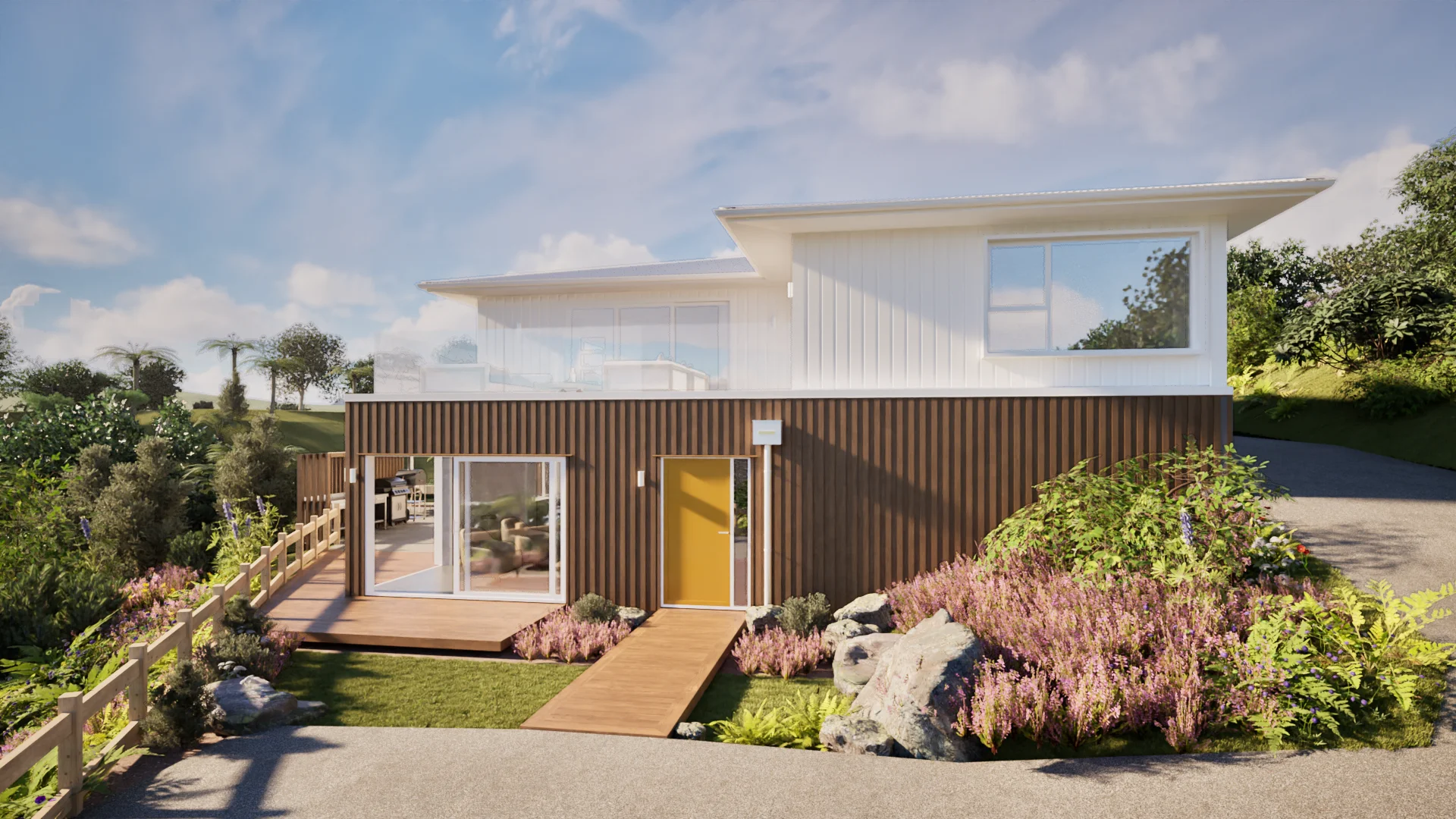
Rotorua is a generous place to build — sections are typically larger than the bigger cities, the Council is straightforward to deal with, and the landscape gives you a lot to work with. It also has a few characteristics that catch people off-guard. Here's a general read.
Soils
Most of greater Rotorua sits on volcanic deposits — predominantly pumice. Pumice drains well and bears load reasonably, but it can settle unpredictably under concentrated loads. Pile foundations are common because they distribute load deeper into competent ground. A geotechnical report is the cheapest insurance for any new build of meaningful size; it tells you what foundation system the engineer will design.
Geothermal context
The Rotorua geothermal system is a recognised and protected resource, managed regionally by Bay of Plenty Regional Council (Rotorua Geothermal Regional Plan). For building, the relevant thing is the Rotorua Lakes Council District Plan: under Plan Change 9, most types of buildings inside the Rotorua Geothermal System are required to submit a geothermal hazards assessment alongside the Building Consent application (Rule NH-R8).
If a property sits in or near the geothermal system — Whakarewarewa, Ohinemutu, Kuirau and parts of Springfield are the obvious examples — that assessment is part of the consent path. Always check Council's planning maps for the specific site. We can pull this for you as part of a feasibility study.
Lakes
Properties around the lakes — Rotorua, Rotoiti, Tarawera, Okareka, Tikitapu, Okataina, Rotomā, Rotoehu, Rerewhakaaitu — fall under specific District Plan rules. Setbacks, earthworks, stormwater management and any structures touching the foreshore each have their own rule set. Anything close to the foreshore (jetties, boatsheds, bank reinforcement) is usually Resource Consent territory, often with a regional council referral as well.
A real example from Stoak's portfolio is Hamurana Road House — a lakeside home re-clad and extended with views over Lake Rotorua. The lakeside characteristics shaped a lot of what got drawn.
District Plan rules out-of-towners miss
A few that come up regularly:
- Height to boundary — most residential zones use a recession plane (the building has to fit inside an envelope drawn from each boundary). On a small section, two-storey designs run out of envelope in unexpected places.
- Site coverage — most residential zones cap how much of the site the building can occupy.
- Outdoor living court — rules around minimum size and orientation. North-facing on a south-sloping section gets fiddly.
- Notable trees — many older sections have protected trees on the title. Removing one needs Resource Consent regardless of the underlying zone.
The actual numbers are in the Rotorua Lakes District Plan. For any specific property the cheapest way to know what's possible is a feasibility study — a written report with the planning rules pulled, the overlays identified, and a sketch of what could fit.
Talk to Council early
For most projects, the District Plan is permissive enough that a competent residential design fits cleanly. Where it doesn't fit — site near a hazard overlay, removing notable trees, anything in the Lakes A Zone — talking to Council's Duty Planner before any design work is the cheapest way to find out what consent path is realistic.
Frequently asked
- Are there special rules for building near Rotorua's geothermal areas?
- Yes. Rotorua Lakes Council's District Plan, after Plan Change 9, requires a geothermal hazards assessment with most Building Consent applications inside the Rotorua geothermal system (Rule NH-R8). Always check the live District Plan for your specific property — Council's planning maps show whether a site is affected.
- Do all Rotorua lakefront properties need Resource Consent?
- Not all, but most projects close to the foreshore — jetties, boatsheds, bank works, building work close to Mean High Water Mark — trigger Resource Consent. The District Plan rules apply across all of the Rotorua lakes. The exact answer depends on the property; a feasibility study pulls the relevant rules.
- What kind of foundation is best for a Rotorua section?
- Most Rotorua sections sit on pumice soils. The right foundation depends on the geotech report, but pile foundations are common because they distribute load deeper into competent ground. For any new build of meaningful size, a geotech report sized to the project is cheap insurance.
Got a project?
Talk it through with Daniel.
If something here applies to a project you're thinking about, send through a brief — I'll come back to you within one business day.