Stoak Journal
Granny flat rules in NZ — what's actually changed in 2026
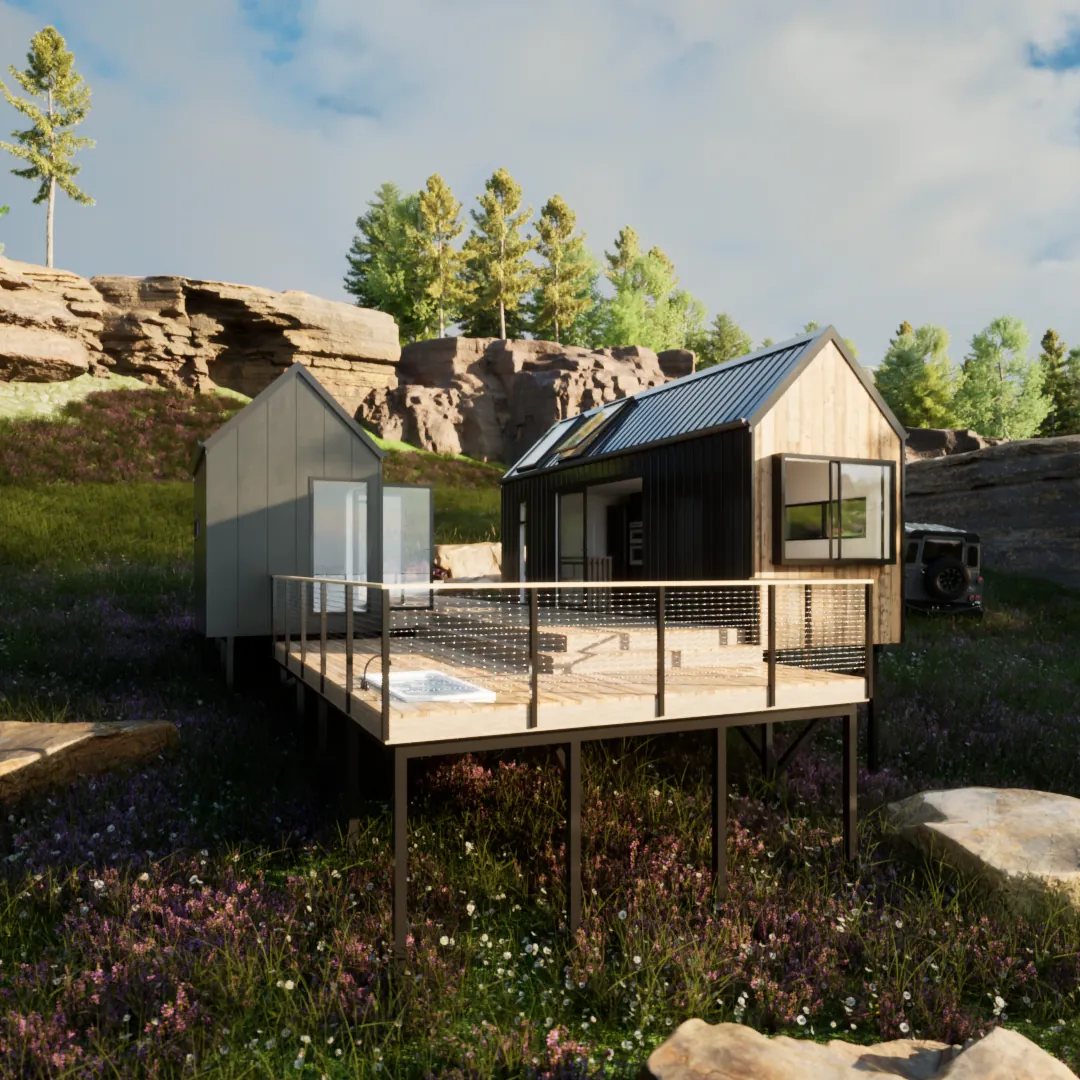
From 15 January 2026, granny flats sit under their own consent exemption — separate from Schedule 1 — that allows small standalone dwellings up to 70 m² to be built without a Building Consent. The exemption is real, but it's narrower than the headlines suggest, and the work still has to be designed and built properly. Here's what the new rules actually say.
What changed
The Building and Construction (Small Stand-alone Dwellings) Amendment Act 2025 introduced a Building Consent exemption for small standalone dwellings — granny flats — up to 70 square metres. The exemption took effect on 15 January 2026.
This sits *alongside* Schedule 1 of the Building Act, not within it. Granny flats have their own conditions and their own pathway. If something falls under Schedule 1 already (a sleepout under 30 m² with no kitchen, for example), it follows Schedule 1's rules. If it's a self-contained small dwelling up to 70 m² with a kitchen and bathroom, it follows the granny flat exemption pathway.
What "exempt" actually means
The exemption removes the requirement to apply for a Building Consent — it does not remove the requirement that the work complies with the Building Code. An exempt granny flat still has to be structurally sound, weathertight, ventilated, energy-efficient, and meet every other code clause that applies. The owner is liable if it fails.
The trade-off is the council doesn't see the design before it's built. The licensed practitioners who design and build it carry the responsibility for code compliance instead.
The conditions
To qualify for the granny flat exemption, the dwelling must:
- Be 70 m² or less in floor area.
- Have a simple design — and meet the Building Code.
- Sit at least 2 metres from any other building or boundary.
- Be designed, built, and supervised by Licensed Building Practitioners. This includes the LBP architectural designer (Design 1 or 2), the LBP carpenter doing the framing, plumbers, gasfitters, drainlayers — every Restricted Building Work category needs the appropriate licensed professional involved. The exemption is from consent, not from using qualified people.
- Have services connections — to public stormwater and wastewater networks, or a compliant on-site system (septic + soakage, or equivalent).
- Have a Project Information Memorandum (PIM) issued by the council before construction starts. The PIM tells you about the property — natural hazards, planning rules, infrastructure capacity — that affect what can be built.
- Be notified to council before construction starts and again once it's completed.
If the design doesn't meet all of those, the exemption doesn't apply and the work needs a full Building Consent.
What's still required even with the exemption
This is where the rules catch people out. The Building Consent exemption doesn't override:
- The Resource Management Act and the District Plan. Height-to-boundary, site coverage, density, parking, outdoor living court, recession planes — all the council planning rules apply regardless. A granny flat in a height-to-boundary breach is still illegal even when no Building Consent is needed.
- Subdivision covenants. Newer subdivisions almost always carry their own conditions on top of the District Plan — minimum floor areas, approved cladding lists, rules about second dwellings. These apply alongside the exemption.
- Notable trees, hazard overlays, special character zones. All separate. Always check the property's overlays.
- Resource Consent triggers. If the granny flat triggers Resource Consent for any reason — bulk and location, density beyond what the zone permits, hazard overlay, lake margin — that's a separate consent, and the granny flat exemption doesn't touch it.
In practice this means a feasibility check on the property is the right first step, even when the granny flat exemption applies. We pull the District Plan rules, the overlays, and any covenants on the title, and you find out before the design begins whether the exemption pathway is viable for your section.
What the granny flat exemption does NOT cover
A few cases where the exemption doesn't apply, and the work needs a full Building Consent:
- Anything over 70 m².
- Multi-storey dwellings.
- Attached secondary units — the dwelling has to be standalone, not built onto the main house.
- Designs requiring Alternative Solutions outside what an LBP designer can self-certify (complex structural, unusual fire engineering, etc.). Those need an engineer and usually a full consent path.
- Sites with significant hazards that the LBP can't adequately address without consent oversight — heavy geotech challenges, severe flood-plain, contaminated land.
If your project hits any of those, the exemption pathway closes and we go through Building Consent the normal way. That's not necessarily worse — Building Consent gives you the council's eyes on the design as a second check, which on a complex site is valuable.
How Stoak handles a granny flat
Stoak treats granny flats as a small everyday-new-build that runs on the granny flat exemption pathway, rather than as a minor-works job. The design effort is genuinely a new home — kitchen, bathroom, sleeping space, weathertight envelope, services, the lot — just on a smaller footprint. The savings from the exemption come at the consent end (no BC fees, no 20-working-day Council clock), not the design end.
The pathway looks like:
1. Feasibility check on your section. Is the exemption viable here? Are there subdivision covenants or RC triggers that change the picture? Does the section take a 2-metre setback comfortably? 2. Concept design. Same as any small new build — site analysis, layout, form study, materials. 3. PIM. Lodged with council. They tell you what hazards and planning rules apply. 4. Working drawings + specifications. A full set sized for the builder, structural pattern to NZS 3604, services, weathertight detailing. No consent application — the drawings instead live with the property as the build record and the basis for the LBP certifications. 5. Council notification before build. A simple notice that the work is starting under the granny flat exemption. 6. Build — by LBPs across every Restricted Building Work category. 7. Council notification once complete. A simple notice that the work has finished.
If that pathway closes for any reason during design (something the PIM surfaces, a covenant we hadn't seen, a Resource Consent trigger) we shift to a full Building Consent route — and the design work transfers across, no rework.
Existing Stoak granny flat designs
For clients who want to move faster, Stoak has a small number of pre-developed granny flat designs that can be adapted to a specific section — saves the concept stage and goes straight to siting and section-specific adjustments. For clients with a particular brief, design from scratch is the alternative.
Whichever route, the granny flat exemption is one of the more meaningful changes to NZ building law in the past few years, and it's a real opportunity for property owners thinking about a second dwelling. Worth getting right.
Sources
- Building and Construction (Small Stand-alone Dwellings) Amendment Act 2025 — search the title at legislation.govt.nz for the enacted text.
- Granny flats exemption: Guidance and resources — building.govt.nz
- LBP — Granny flats building consent exemption
Frequently asked
- Does the granny flat exemption apply to all NZ properties?
- It applies wherever the conditions can be met — the dwelling is 70 m² or less, single storey, simple design, 2 m or more from boundaries and other buildings, designed and built by LBPs, with a PIM and council notifications either side of construction. The District Plan, subdivision covenants, hazard overlays and Resource Consent rules all still apply on top, so on some sections the exemption pathway closes for reasons unrelated to the dwelling itself.
- Do I still need a designer if a granny flat doesn't need a Building Consent?
- Yes. The exemption requires the design and construction to be carried out or supervised by Licensed Building Practitioners — that's an LBP architectural designer for the design, plus LBP carpenters / plumbers / gasfitters / drainlayers as the build progresses. The dwelling has to comply with the Building Code; without an LBP designer, the licensed-practitioner condition isn't met and the exemption doesn't apply.
- What's a PIM and how much does it cost?
- A Project Information Memorandum is a document the council issues that tells you about the property — natural hazards, the relevant planning rules, infrastructure capacity, anything else that affects what can be built. It's required before a granny flat can start under the exemption pathway. PIMs typically cost a few hundred dollars depending on the council; Rotorua Lakes Council publishes its current fees on its website.
- Can a granny flat be over 70 m²?
- Not under the exemption. Anything over 70 m² needs a full Building Consent — the exemption pathway closes. That's not a problem; it just means it goes through Council the normal way.
- Can I add a granny flat to my existing house?
- An attached secondary unit doesn't qualify for the granny flat exemption — it has to be standalone. An attached extension or a major addition runs through the renovation / extension service line, with full Building Consent.
- Where can I read the actual rules?
- The enacted Act is at legislation.govt.nz (search 'Building and Construction (Small Stand-alone Dwellings) Amendment Act 2025'). MBIE publishes a plain-English guide at building.govt.nz under 'Granny flats exemption: Guidance and resources'. Both are linked at the bottom of this article.
Got a project?
Talk it through with Daniel.
If something here applies to a project you're thinking about, send through a brief — I'll come back to you within one business day.